Every skincare app has the same onboarding problem. The user opens the app, answers a five-question quiz about their skin type, and gets a product recommendation that may or may not be accurate. The quiz is a proxy. It is not a diagnosis. Self-reported skin type is wrong about 40% of the time compared to clinical assessment.
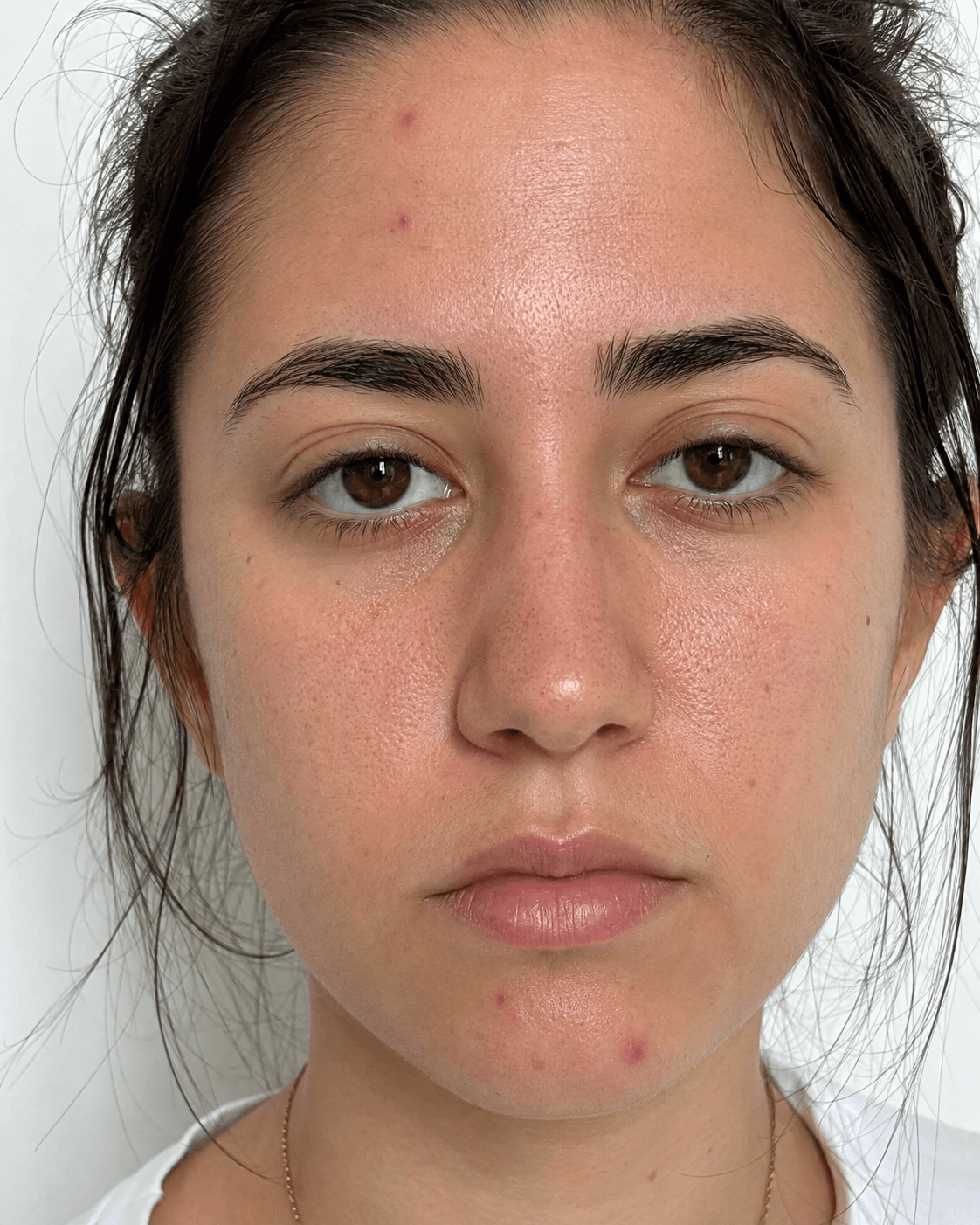
A skin analysis API replaces the quiz with a photo. The user uploads a selfie. The pipeline segments the face, scores eight concern categories, identifies skin type, and returns structured JSON with confidence scores and ingredient-level recommendations. The entire process takes under two seconds. The accuracy is clinical-grade for the concerns it detects.
Skincare platforms such as SkinCeuticals Pro, Dermalogica, Skin + Me, Curology, and dozens of DTC skincare brands are in a race to personalize. The ones that can tell a customer 'your skin shows moderate hyperpigmentation and low hydration' rather than 'you have combination skin' will win the repeat purchase. The API layer that makes this a one-call integration does not yet have a dominant B2B provider.
TL;DR: A FaceDetect + SkinSegment + AnalysisModel pipeline processes a portrait photo and returns a structured skin report in under 2 seconds at $0.005-0.008 per scan. Runflow exposes the ComfyUI workflow as a managed API endpoint. No GPU infrastructure. No model fine-tuning. The platform gets structured skin data per user, per session.
| Stack | Infra /mo | AI team | Total cost | Revenue | Margin |
|---|---|---|---|---|---|
Runflow 10% volume discount applied | $1.1K | $0 | $1.1K | $5.0K | 78% |
Cloud API + manual QA similar pricing · no auto-QA · part-time engineer needed | $1.2K | ~$5K | $6.2K | $5.0K | loss |
Self-hosted GPU raw compute · full-time AI engineer required | $400 | $12K | $12K | $5.0K | loss |
Runflow Sentinel — built-in quality control layer that automatically detects and discards failed or low-quality outputs before delivery. You only pay for images that pass QA. No engineer needed to babysit the pipeline.
Pricing based on Runflow published rates (June 2026) with automatic volume discounts. Revenue column is illustrative — actual client pricing varies by vertical and contract size. GPU self-hosted estimate uses $0.04/img raw compute cost.
The gap the skincare market has not filled
L'Oreal has Color Genius for B2C hair color. Neutrogena had Skin360 as a consumer app. These are closed ecosystems. No API. No SDK. No way for a third-party platform to embed the analysis. They solve the consumer problem for their own brand. They do not solve the platform problem for the rest of the skincare industry.
The B2B gap is specific: a skincare platform wants to show users a skin analysis at onboarding, at each product recommendation, and at re-purchase. They need a call that takes a photo and returns JSON. They do not want to train a dermatology model. They do not want to manage GPU infrastructure. They want one POST request with a documented schema.
That call does not exist as a turnkey B2B product with the depth and accuracy a clinical-adjacent application requires. The market is open.
How the pipeline works
The analysis runs as a five-node ComfyUI workflow. Each node is a discrete, replaceable component. The pipeline is not a black box: you can inspect every intermediate output, swap models, and adjust thresholds per client.
LoadImage receives the uploaded portrait. FaceDetect runs a bounding-box plus landmark model to locate the face region and align it for analysis. SkinSegment produces a per-pixel mask separating skin from hair, eyes, and background. This isolates the signal and prevents the hair color or background from influencing the skin metrics. AnalysisModel scores the masked region across eight concern categories. SaveReport serializes the scores into the output JSON.
What the API returns
The response is structured JSON. Every field is deterministic given the same input image: no generative randomness, no hallucinated concerns. Each concern score is a float between 0 and 1, derived from pixel-level analysis of the segmented skin region.
{
  "skin_type": "oily",
  "hydration_score": 0.42,
  "oiliness_score": 0.78,
  "sensitivity_score": 0.61,
  "concerns": [
    { "name": "active_acne",      "severity": "high",     "score": 0.82 },
    { "name": "enlarged_pores",   "severity": "moderate", "score": 0.61 },
    { "name": "redness",          "severity": "moderate", "score": 0.54 },
    { "name": "uneven_texture",   "severity": "mild",     "score": 0.38 }
  ],
  "top_ingredients": ["salicylic_acid", "niacinamide", "zinc"],
  "confidence": 0.91,
  "processing_ms": 1740
}
The top_ingredients array maps directly to a product catalog lookup. A skincare platform can pipe this response into its recommendation engine without any intermediate processing. The platform does not need a dermatologist to interpret the output: the schema is self-documenting.
| Stack | Infra /mo | AI team | Total cost | Revenue | Margin |
|---|---|---|---|---|---|
Runflow 10% volume discount applied | $1.1K | $0 | $1.1K | $5.0K | 78% |
Cloud API + manual QA similar pricing · no auto-QA · part-time engineer needed | $1.2K | ~$5K | $6.2K | $5.0K | loss |
Self-hosted GPU raw compute · full-time AI engineer required | $400 | $12K | $12K | $5.0K | loss |
Runflow Sentinel — built-in quality control layer that automatically detects and discards failed or low-quality outputs before delivery. You only pay for images that pass QA. No engineer needed to babysit the pipeline.
Pricing based on Runflow published rates (June 2026) with automatic volume discounts. Revenue column is illustrative — actual client pricing varies by vertical and contract size. GPU self-hosted estimate uses $0.04/img raw compute cost.
Implementation: one POST request
The integration is a single API call. No model download. No GPU provisioning. No inference server to manage. The platform sends a base64-encoded portrait and receives the structured report.
import requests, base64

with open("selfie.jpg", "rb") as f:
    image_b64 = base64.b64encode(f.read()).decode()

response = requests.post(
    "https://api.runflow.io/v1/workflows/skin-analysis",
    headers={"Authorization": "Bearer YOUR_API_KEY"},
    json={"image": image_b64}
)

report = response.json()
print(report["skin_type"])       # "oily"
print(report["concerns"][0])    # {"name": "active_acne", "severity": "high", ...}
Response time averages 1.8 seconds on a standard portrait. At $0.006 per scan, a platform running 10,000 analyses per month pays $60 in API costs. Compare that to the alternative: a custom model fine-tuned on clinical dermatology data, hosted on a dedicated GPU, maintained by an ML engineer. The build-vs-buy math is straightforward for any platform below enterprise scale.
Build vs buy: the real cost comparison
Most skincare platforms face the same build decision. The question is not whether skin analysis adds value: it clearly does. The question is whether the feature justifies the infrastructure cost.
| Self-built | Runflow API | |
|---|---|---|
| Model training or licensing | $15,000-$80,000 | $0 |
| GPU infrastructure (monthly) | $800-$2,400 | $0 |
| ML engineer (monthly) | $8,000-$12,000 | $0 |
| Time to first integration | 3-6 months | 1-2 days |
| Cost at 10K scans/month | $8,800+ (infra + team) | $60 (API only) |
| Maintenance | Ongoing (model drift, GPU updates) | Zero |
The self-build path makes sense at enterprise scale with 500K+ monthly scans and custom dermatology requirements. Below that threshold, the API cost curve is flat and predictable. The engineering time saved compounds: a two-day integration versus a six-month build is not just a cost difference. It is a six-month head start on the feature roadmap.
Who is building this and why
The strongest ICP is not a standalone skincare app. It is a platform that already has a product catalog and a customer database. The skin analysis API adds a personalization layer without requiring the platform to become an AI company.
Professional skincare brands with educator networks (Dermalogica, SkinCeuticals Pro) use the analysis to train their practitioners and standardize consultations across franchises. DTC skincare brands (Skin + Me, Curology, Function of Beauty) use it at onboarding to reduce quiz abandonment and improve first-order recommendation accuracy. Spa and salon software (Fresha, MindBody) embeds it as a premium feature for estheticians booking facial appointments.
The commercial intent signal is strong: buyers searching for skin analysis APIs are evaluating product integrations, not consumer app subscriptions. At a CPC above $12, the search intent is decisively B2B. That is the same price signal you see for dental imaging software and medical scheduling APIs: categories where a wrong purchase costs a company months of integration work.
The data advantage: what platforms do with skin profiles
A single scan is a feature. A sequence of scans is a dataset. Platforms that run skin analysis at every session build longitudinal skin profiles for their users: a record of how oiliness, hydration, and specific concerns evolve over months of product use. That data has two compounding values.
First, it enables genuine efficacy claims. When a platform can show a user that their hyperpigmentation score dropped from 0.74 to 0.41 over 90 days while using a specific routine, that is not a testimonial. It is a data point. Efficacy data is the highest-converting content in skincare marketing. It also reduces churn: a user who has seen measurable improvement does not cancel.
Second, aggregate anonymized data is a product differentiator. A platform with skin profiles across 200,000 users by skin type, climate zone, and product history has a dataset that no brand has built from clinical trials alone. That dataset is a moat.
Limitations to know before you ship
The pipeline performs best on well-lit frontal portraits. Poor lighting, extreme angles, heavy makeup, and low-resolution images reduce confidence scores. The API returns a confidence field. Flag results below 0.75 and prompt the user to retake the photo rather than surfacing a low-confidence analysis as definitive.
This is not a medical diagnosis. The output is cosmetic-grade assessment suitable for product recommendation. It does not replace a dermatologist. For platforms in the medical aesthetics space (clinical medspa software, telehealth), the regulatory requirements are materially different. Consult with legal before using AI-generated skin assessments to inform medical treatment.
On demographic coverage: models trained primarily on lighter skin tones show higher error rates on concerns like hyperpigmentation on darker skin. Verify the model's benchmark data before committing to a demographic your user base includes at scale.
Privacy is a real consideration. A skin photo is biometric data in several jurisdictions, including under GDPR in Europe and CCPA-adjacent frameworks in California. Users should give explicit informed consent before their photo is processed and stored. The analysis API should be called with a photo that is used for the scan and then discarded, not retained in the provider's infrastructure. Confirm your API provider's data retention policy before launch. This is not a hypothetical: regulators have issued fines to beauty tech companies for retaining facial data without adequate disclosure.
Finally, set user expectations correctly. The analysis output is a starting point for a recommendation, not a diagnosis. The platforms that deploy this successfully present the results as 'based on your photo, here is what we observe' rather than 'your skin has these conditions.' The framing matters both for regulatory compliance and for user trust. A user who understands that the tool is a smart recommendation layer, not a clinical assessment, is less likely to challenge an imperfect result and more likely to engage with the product suggestions that follow.